Te Kete Project Update - February 2026
Updated: Feb 18

In this first MCLStead Project News Update for 2026 we will cover off:
Construction activity happening in the first quarter
MCLStead’s commitment to using local subcontractors as much as possible:
Spotlight on Almak Limited
Spotlight on Hawke’s Bay Membrane Solutions Limited
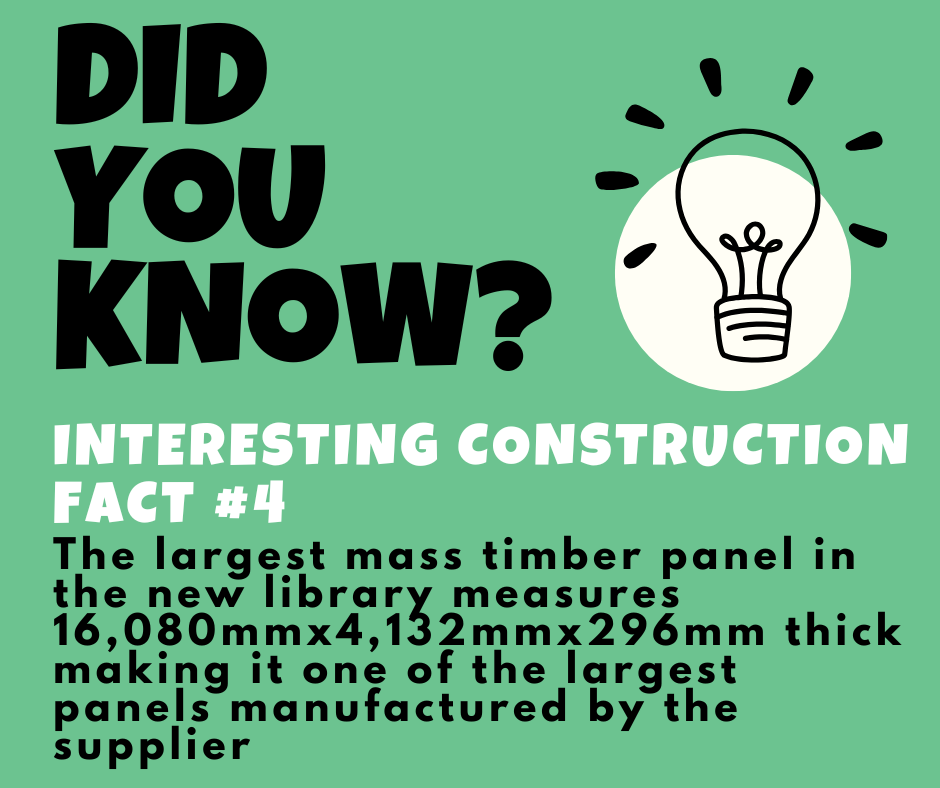
Did you know? – Interesting Construction Fact #4
Latest drone photos
Design feature spotlights #1:
Mass Timber
Structural Steel.
Construction Activity happening in the First Quarter
Key construction activity in the first quarter of 2026 includes:
Final foundation concrete pours for the new library
Commencement of façade installation on the refurbished office tower
Foundations for the new council chambers
Commencement of structural steel installation on the new library
Installation of the new stormwater system for the site
Commencement of civil infrastructure works in Hastings and Dalton Street.
MCLStead’s Commitment to using Local Subcontractors as much as Possible
MCLStead is a joint venture of two local construction companies with over 100 years construction experience MCL Construction and Stead Construction. MCLStead is committed to delivering the Napier Civic Precinct project by local, for local and with local as much as possible. We’re in the process of engaging local subcontractors across various trades. You can find spotlights on Almak Prevention Specialists and Hawke’s Bay Membrane Solutions below:

Almak Prevention Specialists’ work on Te Kete
Almak Prevention Specialists are delivering the active fire protection services across the office tower, the new library and council chambers.
The scope of this work includes:
Supply and installation of automatic sprinkler systems
Supply and installation of analogue addressable Type 4 fire alarm systems
Supply and installation of a kitchen suppression system.
It’s not until April that Almak will be on site to formally commence their works. They will have two teams of four on site with a Sprinkler Project Manager and a Fire Alarms Project Manager.
Who is Almak?
Almak is proud to be Hawke’s Bay’s largest fire protection company, now in its 21st year of operation. Almak employs a team of 29 dedicated professionals across their specialist departments, and are widely recognised for their technical expertise, quality service delivery, and long-standing client relationships.
Almak’s services meet all fire protection needs, from initial consultation through to installation, testing and maintenance:
Fire Alarm Systems – Consultation, Design & Installation
Fire Sprinkler Systems – Consultation, Design & Installation
Passive Fire Protection Systems
Special Hazard Fire Suppression System – Gaseous Flood & Aerosol Solutions
Fire Equipment Sales & Service – Fire Extinguishers & Fire Hose Reels
Evacuation Scheme Specialists
Building Compliance (BWOF) – IQP Inspections & Testing.

Almak are members of the Fire Protection Association of New Zealand, members of the New Zealand Security Association and are a Listed Contractor for Fire Sprinkler Systems in New Zealand.
Local Experience
Almak have worked on various projects across Hawke’s Bay, some of these are outlined below:
Rockit Global Coolstores & Packhouse
Design & Build Sprinkler System & Fire Alarm
Diesel Fire Pump & Fire Water tank
Summerset Palms Te Awa Rest Home & Care Facility
Design & Build Sprinkler System & Fire Alarm
Diesel Fire Pump
Placemakers Havelock North
Design & Build Sprinkler System & Fire Alarm
Diesel Fire Pump
Bupa Napier Resthome & Care Facility
Design & Build Sprinkler System & Fire Alarm and Passive Fire
Diesel Fire Pump
Customs Quay Apartment Buildings
Design & Build Sprinkler System & Fire Alarm
Kaweka Hospital Stage 2
Design & Build Sprinkler System & Fire Alarm and Passive Fire
Ascot Park Rest Home & Care Facility
Design & Build Sprinkler System & Fire Alarm and Passive Fire
Diesel Fire Pump
Te Aute College Hostel Blocks
Design & Build Sprinkler System & Fire Alarm and Passive Fire
Diesel Fire Pump.
What’s Next
Almak are looking forward to providing fire protection works updates once they arrive on site in April.

Hawke’s Bay Membrane Solutions Work on Te Kete
Hawke’s Bay Membrane Solutions are delivering the waterproofing services across the office tower, the new library and council chambers.
The scope of this work includes supply and installation of Sika waterproofing to the lift pit, in-situ retaining walls and slab perimeter.
Hawke’s Bay Membrane Solutions have a team of three on site.
Who are Hawke’s Bay Membrane Solutions
Hawke’s Bay Membrane Solutions are problem solvers; they have 23 years of hands-on experience in delivering customised roofing and waterproofing solutions for Hawke’s Bay homes and businesses.
Hawke’s Bay Membrane Solutions are committed to:
Honest solutions that last
Expert workmanship and trusted products
Clear communication from start to finish.
Their services include:

Local Experience
Hawke's Bay Membrane Solutions have worked on various residential projects across Hawke’s Bay, and the Hawke’s Bay Aquatic Centre.
Latest Drone Photos


Design Feature Spotlights
In collaboration with project architects (Athfield Architects Limited) and sub-contractors (Red Stag TimberLab and Patton Engineering Ltd ) MCLStead are excited to share the first Te Kete design feature spotlights:
Mass Timber
What is Mass Timber?
Mass timber is a sustainable construction method comprising large-scale, engineered wood products (EWP’s).
Unlike traditional timber framing, the EWP structural elements can have a strength-to-weight ratio comparable to steel and concrete, allowing them to be used in structural applications.
In New Zealand the most commonly used are:
Cross-Laminated Timber (CLT). CLT is the lowest carbon building material.

Glued Laminated Timber (Glulam or GLT). GLT/Glulam has a superior fire resistance rating when compared with steel.

LVL (Laminated Veneer Lumber). LVL are strong energy absorbing structures especially suited to providing seismic resistance using post tension frame systems.

How is Mass Timber Manufactured?
EWPs are created by bonding together multiple layers of wood fibre, either veneer or planks using various methods involving pressure, heat and structural adhesives. The EWP layers, timber grade, species and treatment, grain orientation and pressing process is specific to the EWP being produced.
CLT is made by layering wood panels alternating in 90-degree angles to each other and bonding them together with adhesive. It is usually 3-7 layers.
Glulam is an engineered structural material consisting of a number of graded, kiln dried and selected full length laminations.
LVL is an engineered wood product made by bonding thin layers of wood (veneer) together, with all the wood grains running in the same direction to create a single, very strong large billet (1200mm wide x 90mm thick and up to 18m long). The billet is then cut and re-laminated into the required section sizes.

Where mass timber will feature on the new library
For the front of house structure. The skeleton structure is LVL and GLT. The Level 1 floor and roof panels are CLT. The benches and stairs are also constructed out of CLT.

In columns and braces that prop the wooden waka huia (treasure box) within the building’s double height. These timber LVL columns and beams also support the roof and veranda.

In floor and roof panels that achieve areas of column-free spaces enabling community-orientated functions within the library.

Key considerations in the use of mass timber
Mass timber provides weight benefits over steel and concrete alternatives and reduces the foundations of the building.
The ability to use New Zealand grown and fabricated timber elements provides benefits to the local economy and reduces carbon emissions associated with transportation from factory to site.
All the mass timber being used in the new library is Forest Stewardship Council (FSC) certified. (FSC sets standards for forest products (like timber and paper) to ensure they are sourced environmentally, socially, and economically).
When will mass timber start to arrive on site
Mass Timber will start to arrive on site in May 2026.
Key metrics for the mass timber to be used across the Te Kete project
Volumes & Weights:
CLT 698m³ and 349 ton
Glulam 23m³ and 11.5 ton
LVL overall 76m³ and 38 ton
Size:
The largest CLT panels for this project are 16,080mm x 4,132mm x 296mm thick. These are the largest double span CLT panels that have been produced by Red Stag TimberLab.
Growing Days:
Typically, Pinus Radiata takes approximately 30 years to reach commercial maturity for harvesting. All mass timber for the Te Kete project is sourced from New Zealand suppliers utilising New Zealand grown trees.
Other Hawke's Bay projects where mass timber has been a key design feature
Pan Pac | Wellesley Road Apartments |
 |  |
Heretaunga House | Havelock North New World |
 | 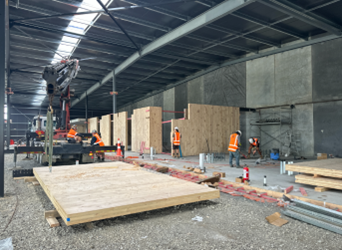 |
Hawke's Bay Airport Fire Station | Woodford House Gatehouse |
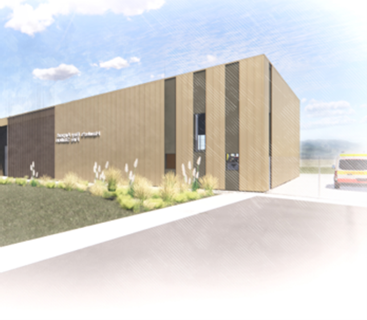 |  |
Kāinga Ora – Bledisloe Road | Kennards Self-Storage Hastings |
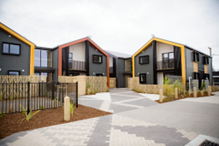 |  |
Structural Steel
Where structural steel will feature on the new library
Backpack structure – this is the ‘back of house’ services areas.
Miscellaneous structural steel additions to the mass timber.


How is structural steel manufactured?
Structural steel is manufactured through a process that transforms raw iron ore into high strength steel sections used in construction.
The process begins with iron ore being heated and refined in a blast furnace to produce molten iron, which is then combined with controlled amounts of carbon and other elements to create steel.
The molten steel is cast into large billets or slabs, which are reheated and passed through rolling mills to form universal beams, columns, channels, plates, and other structural shapes.
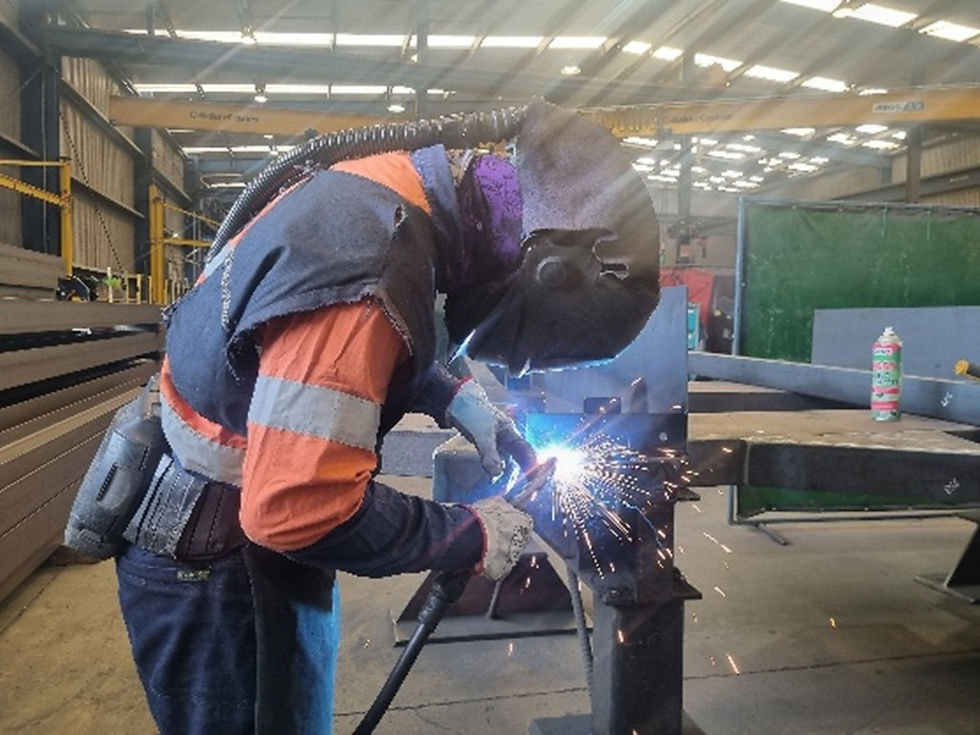
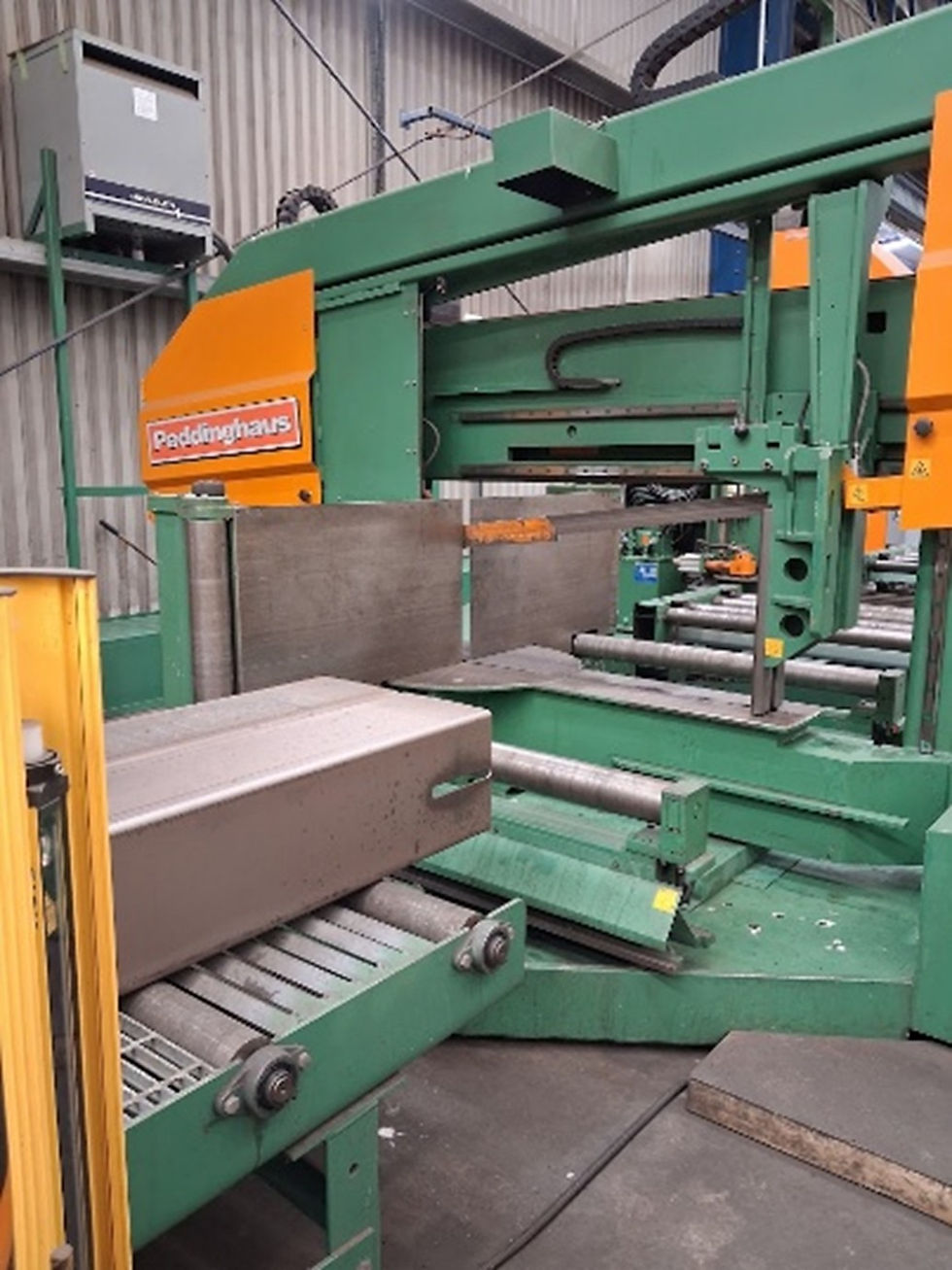
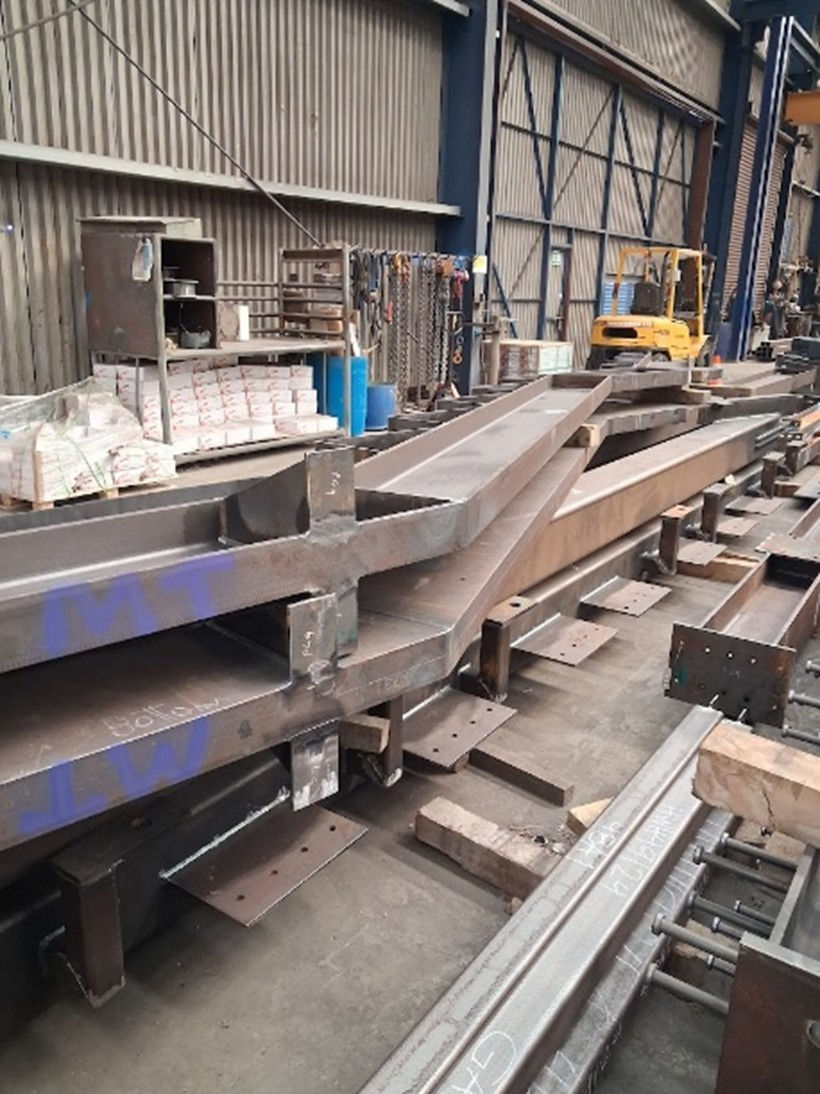
These sections are then cut, drilled, welded, fabricated and painted to suit specific project requirements.
At Patton Engineering, they:
receive certified structural steel sections and carry out detailed fabrication, including cutting, coping, welding, assembly, and surface preparation.
undertake in house painting, site delivery, and full structural steel erection.
manage the process from fabrication through to installation, providing an end-to-end solution that simplifies coordination for the main contractor and reduces overall project risk.
Throughout the manufacturing process, strict quality control measures are applied to ensure compliance with New Zealand standards and project specifications.

When the structural steel will start to arrive on site
The structural steel for the new library will start to arrive on site from the 19 March 2026.
The structural steel will be lifted into place with a spider crane and telehandler.
Key metrics for the structural steel to be used in the new library
Total weight 139.2 ton
Tallest column 12.14 metres
Heaviest column 3.12 ton.
Design Feature Spotlights - what's next
In our next Design Feature Spotlights we will showcase the facade for the office tower, treatment methodology for mass timber, structural steel installation and more!